Introduction
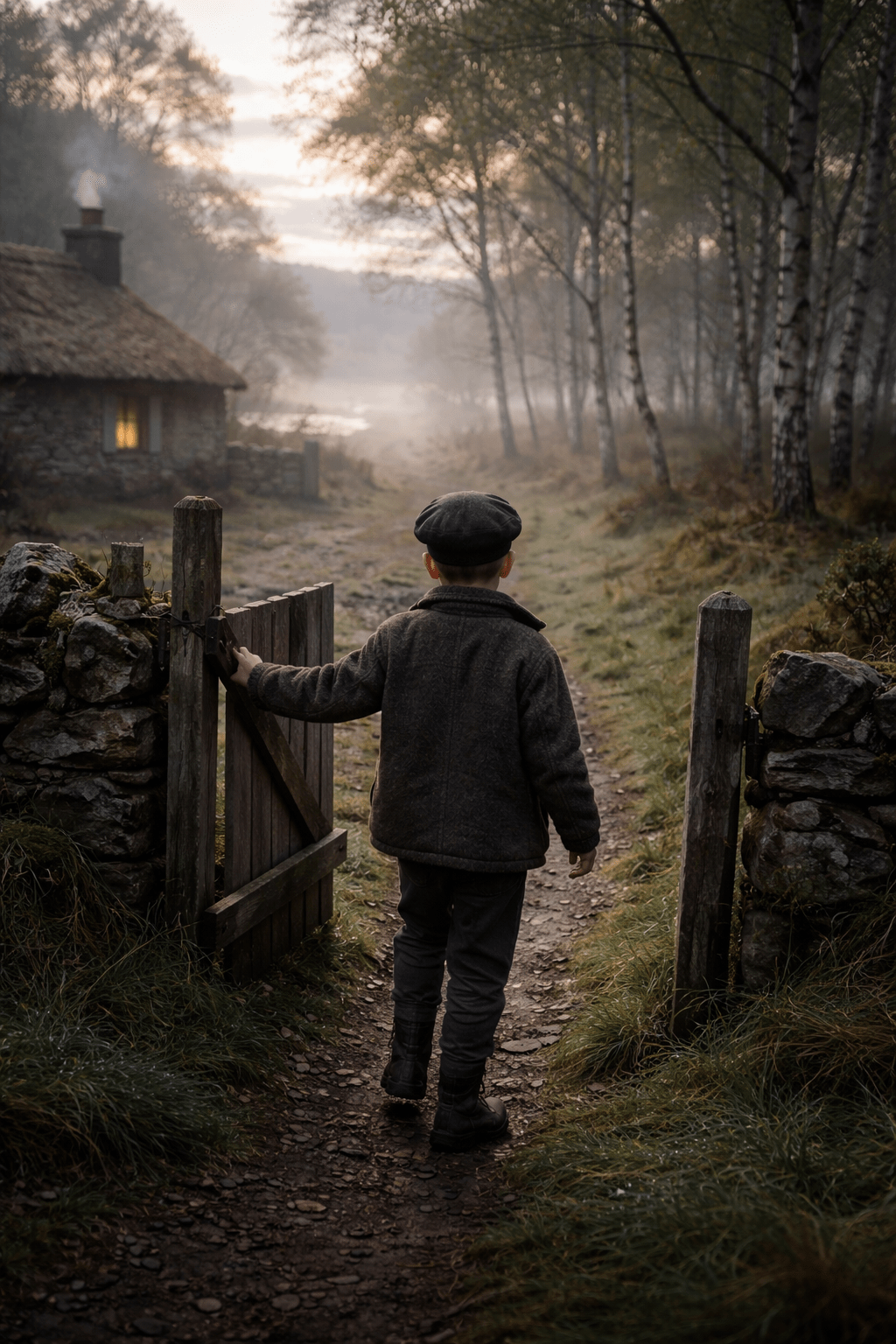
At the northern edge of Scotland, a small boy steps into the first light of day. The air carries peat smoke and sea salt, the sun low over the Dornoch Firth. Behind him, a cottage door closes softly.
His boots are worn, his pockets nearly empty, but he carries the quiet certainties of family: a father steady on the plough, a mother already at the hearth, siblings whose names will one day be fixed in the census. These small facts hold his world together.
The firth lies dark at low tide, and the peat gives gently underfoot. He keeps his eyes on the ground, noting where deer passed in the night. Beyond the fenceline, the field slopes toward the water, where the tide turns slow and deliberate.
At the edge of the wood, he pauses. The trees whisper overhead, their leaves catching the pale light. Then he steps into the dimness beneath the branches, not knowing that every step from here will carry him farther from the firth, though never beyond its memory.
Family in the Highlands
Morning in Sutherland did not begin with clocks. It began with light, the thin grey wash over the firth, the slow lifting of mist from the hollows. For the McCulloch family, the day’s shape was set long before the sun cleared the ridge.
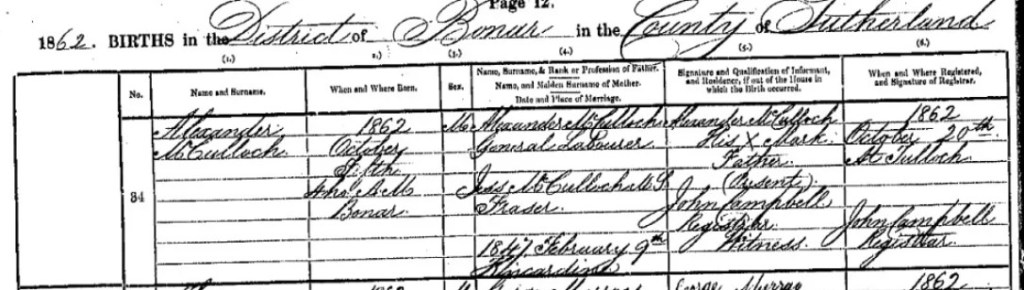
Born on 5 October 1862, the seventh of eight children, Alexander McCulloch belonged to a household where every pair of hands mattered.
His parents belonged to an older Highland world, in which identity was carried in the steady fulfilment of duty. His father, also Alexander, moved through the fields with the quiet assurance of a man shaped by wind and experience. Weather‑beaten and God‑fearing, he held to the old beliefs: that a man’s worth lay in his labour and how he carried out his duty. Where children learned by watching before doing, and that a family’s strength was proven in how it endured hardship. Like many Highland men who no longer lived by the croft alone, he pieced together a living from farm service, seasonal labour.
His mother, Jess, kept the home with the same unspoken discipline. Mother to eight, she was the centre of a household whose days were marked by tasks that never truly ended, tending the fire, cooking meals, mending clothes, and holding the family together through scarcity and strain. Years of toiling on farms had left her frail, but her authority remained firm, rooted in the old understanding that the hearth was a woman’s domain and the family’s anchor. Neither she nor her husband could read or write; the language of the home was Gaelic, the language of kinship and memory.
Yet the boundaries of those roles were far more porous than they appeared. The crofting year moved in its own relentless circle, and every pair of hands was needed. Their lives were driven by the seasons, ploughing in spring, lambing and shearing as the weather warmed, cutting and carting in summer, lifting and storing in autumn. The days were long and the work unending, with little variation from one year to the next. Jess was not confined to the hearth; she was out on the land as much as her husband, lifting and carrying, tending the beasts, cleaning the byre, and taking her place in the fields whenever the season demanded it. Her labour was woven into every part of the croft’s survival, as essential and unremitting as his.
Over Skibo – 1871
By the spring of 1871, the McCullochs had already traced a quiet path across the northern counties. Married in Ross-shire, they had welcomed their first children in the scattered townships of Creich, but now lived at Over Skibo on the edge of the Skibo Castle estate. The census taken that April captured them in a rare moment of stillness: a rural household gathered around the hearth, a shepherd boarding in the corner of the room, and three boys listed as scholars, their chores finished for the night.
Their tied cottage stood on a rise overlooking the firth, one of several dwellings attached to the estate farms. Built of stone and roofed in slate, it was sturdier than the homes they had known before, though still marked by familiar draughts and the darkened walls of peat smoke. A box bed occupied one corner, another stood opposite, and a narrow ladder led up to the rafters where the children slept beneath the sloping roof.
Missing from the household that day were two of the older sons who had already left home. John, twenty‑four, the eldest, had gone south some years earlier to the mining districts of Ayrshire. By 1871, he was employed as a railway labourer, part of the growing number of men drawn to the expanding industrial towns. Thomas, eighteen, had followed when he was old enough, very likely with his brother’s help, securing employment beside him on the railways.
Also absent were his two sisters, Mary, sixteen and Jessie, eleven. Both these girls had already gone into service. Mary was employed by a tenant farmer named William MacKay in Bonar, and Jessie was a servant for another family on a large croft in Dornoch.
🏡 1871 Census — Over Skibo, Civil Parish of Dornoch
Schedule No. 53 — House Inhabited
| Name | Relationship | Age | Occupation | Birthplace |
|---|---|---|---|---|
| Alexander McCulloch | Head | 46 | Farm Servant | Tarbat, Ross |
| Jess (Janet) McCulloch | Wife | 46 | — | Ferrintosh, Ross |
| Roderick McCulloch | Son | 22 | Farm Servant | Creich, Sutherland |
| Donald McCulloch | Son | 12 | Scholar | Creich, Sutherland |
| Alexander McCulloch | Son | 8 | Scholar | Creich, Sutherland |
| Philip McCulloch | Son | 6 | Scholar | Creich, Sutherland |
| Angus Ross | Boarder | 21 | Shepherd | Kincardine, Ross |
A Sutherland Lad
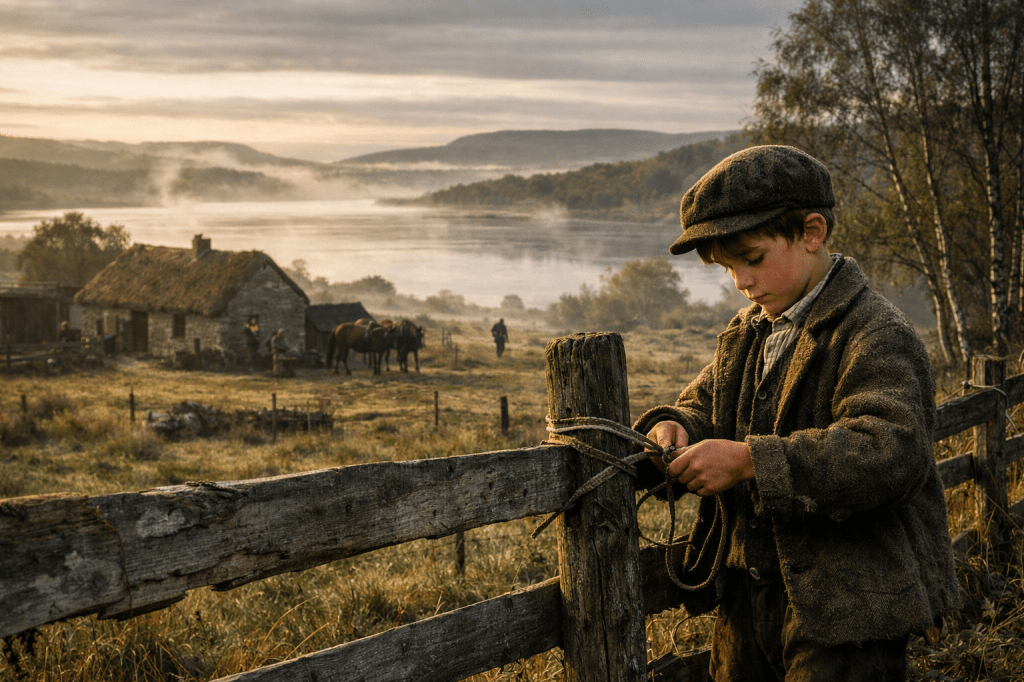
At that time, Alexander’s world was bounded by the distance his legs could carry him. Down to the shore to look for crabs under the rocks or gather driftwood; across the fields to play in the woods with his brothers, Donald and Finlay, when chores allowed; along the track to the parish school at Clashmore, where lessons were simple, reading, writing, and arithmetic under the parish teacher’s strict eye. But the real education was found at home on the croft, helping his father and older brother in the fields, watching his mother’s deft hands as she carded and spun, absorbing the quiet rituals that held the household together.
The presence of Angus Ross, the young shepherd who boarded with them, added another thread to the household’s fabric. He came and went with the flocks, his job carrying him across the moorland and into the high ground where the sheep grazed. To the children, he was a figure of quiet fascination, a man whose days unfolded beyond the boundaries of the farm, who knew the hill paths and the weather signs, and who carried with him the faint scent of lanolin and heather even after nightfall.
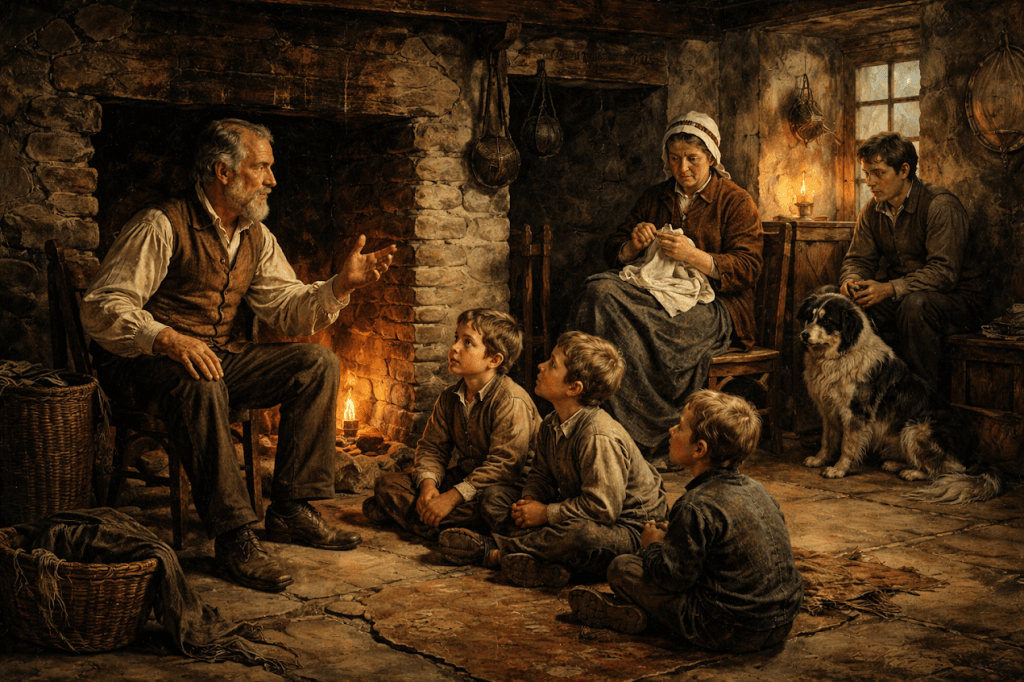
When the day’s work was done, another kind of learning unfolded. As the light faded behind the hills and the wind pressed against the walls of the croft, the family settled around the hearth. The small, steady glow of the fire provided dim light. The boys huddled where they could find warmth, ready to listen. Stories spoken in Gaelic, told sparingly, offered almost in passing, carried fragments of memory, old tales handed down from one generation to the next.
In that circle of firelight, the old tongue held its ground: in the humour in their father’s voice, the lull of their mother’s songs. For the boys, it was a quiet inheritance, absorbed as naturally as breath.
In those stories, Alexander learned about the wider world, of history and heritage. Tales of the Clearances, of evictions and burned roofs, were not told to frighten children; they were simply part of the landscape, like the ruins of old crofts half‑swallowed by bracken that haunted the hills. He heard names spoken with quiet weight: Strathnaver, Kildonan. He did not yet grasp their meaning, but he sensed that the land held memories older and harsher than his own.
Gardeners of the Estate
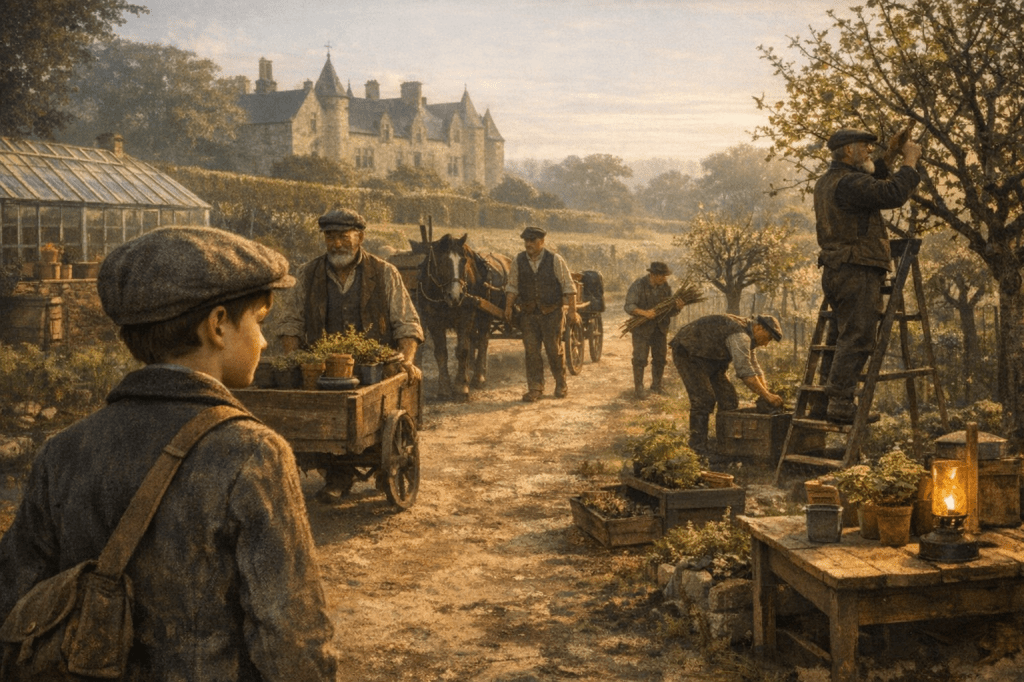
As Alexander grew older, he became more aware of the different kinds of work carried out across the Skibo estate. The farms closest to the cottage were familiar, fields of oats and bere, the byres with their steady heat, the horses his father and Roderick handled with practised skill. But other parts of the estate drew his eye: the walled gardens near the main house, the glasshouses bright even on dull days, and the long borders where gardeners used tools he did not yet know by name.
Across Scotland, estate gardens were expanding, and skilled gardeners were increasingly in demand. Boys from crofting families could sometimes secure apprenticeships if they showed reliability and a willingness to learn. Word of such openings travelled quietly between estates, carried by shepherds, carters, and visiting tradesmen. Alexander heard fragments of these conversations, mentions of Dunrobin Castle and its renowned gardens, and of a head gardener known for taking on promising boys. He listened without fully understanding, but he sensed that some paths led beyond the croft.
On his way to school, he sometimes passed these men on the road, their carts filled with soil or cuttings, their jackets dusty from the potting sheds. Their tasks were different from the farms, more deliberate, more ordered. Some were older men trained on other estates; others were apprentices learning to prune fruit trees, raise seedlings, and keep the ornamental grounds in good condition. Alexander noticed their steadiness, the quiet concentration that set them apart.
Family Changes
In June 1874, Roderick married Johann Cameron, a young domestic servant from Edderton, whose life, like his own, had been shaped by the demands of estate. Not long after, he left the fields of Skibo to join the Police Constabulary, exchanging the demands of farm labour for the discipline of uniformed service. By the end of the decade, he was settled in Creich. His departure was a clear sign that the McCulloch children would not all stay tied to the land that had raised them.
Before any plans for Alexander could take shape, the family faced a loss that altered all of their lives. In the spring of 1875, Jess became ill. What began as a persistent cough soon deepened into pneumonia. She was fifty‑two, her strength worn by nine pregnancies, years of physical labour, and winters that had taken their toll. The cold months had been particularly harsh, and by the time the weather softened, her body could no longer recover.
The cottage adjusted around her without discussion. Alexander and his brothers fetched kindling and kept the fire built up so the room stayed warm. His sister, Mary, then twenty, had returned to care for her ailing mother. She stepped quietly into the role their mother had once held, minding the hearth. She prepared the broths Jess could barely swallow, washed her face, and kept the younger boys occupied so the room remained calm. Sitting beside her, smoothing the blankets, speaking softly when she stirred.
Jess remained in the box bed, propped against folded blankets, her breathing shallow and uneven. The family moved carefully around her, aware that noise troubled her. Mary’s presence became the anchor of those days, calm, capable, and constant, offering what comfort she could.
On 17 April 1875, Jessie died, her son Roderick later registering the death. There was no sudden moment, only the realisation that her breathing had stopped and that the centre of the household was gone. The chores continued, meals to prepare, animals to tend, but the cottage was no longer the same.
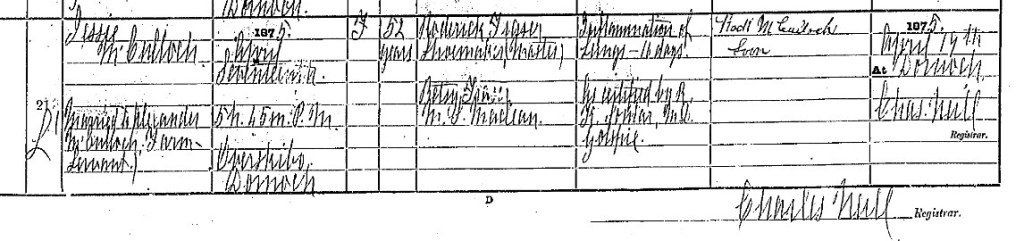
Jessie’s absence was felt in every corner of the house. Life continued, but it no longer resembled the years before her illness. Alexander and his younger brother Finlay sensed the shift most keenly. They were no longer treated as children, and the expectation that they would soon contribute in a meaningful way settled quietly into everyday conversation, shaping the path that lay ahead.
The opportunity at Dunrobin, once only a rumour carried between estates, now stood out as the clearest way forward: a chance to learn a trade, to ease the burden on the household, and to step into the adult world earlier than he might have imagined.
Opportunities in gardens did not come often, but they did come. Estates across Sutherland occasionally sent word that they were seeking boys to train, and Dunrobin Castle was known for taking on apprentices who showed promise. Its head gardener had a reputation for strict standards, but also for producing skilled men.
It was through the usual channels, quiet talk between men, a message passed from one estate to another, that Alexander first heard of an opening at Dunrobin. Nothing was guaranteed; boys were expected to present themselves, show willingness, and accept whatever tasks were given in the early months. Still, it was a real chance, and more than many boys received.
When the news reached the McCulloch cottage, it was met with practical consideration rather than celebration. The family understood what such a position could mean: steady training, a trade with prospects that did not depend entirely on physical strength. His father weighed the distance and the cost; Mary, already carrying much of the household chores since Jessie’s death, said little but understood the necessity. No one discouraged him.
Alexander left Over Skibo shortly after his mother’s death. There was no ceremony to the departure. He rose before daylight, dressed in his best shirt, and tied his few belongings in a small bundle. Mary was already awake by the hearth, her shawl pulled tight around her shoulders. Donald and Philip stirred in the loft above, aware of the moment even before they climbed down the ladder.
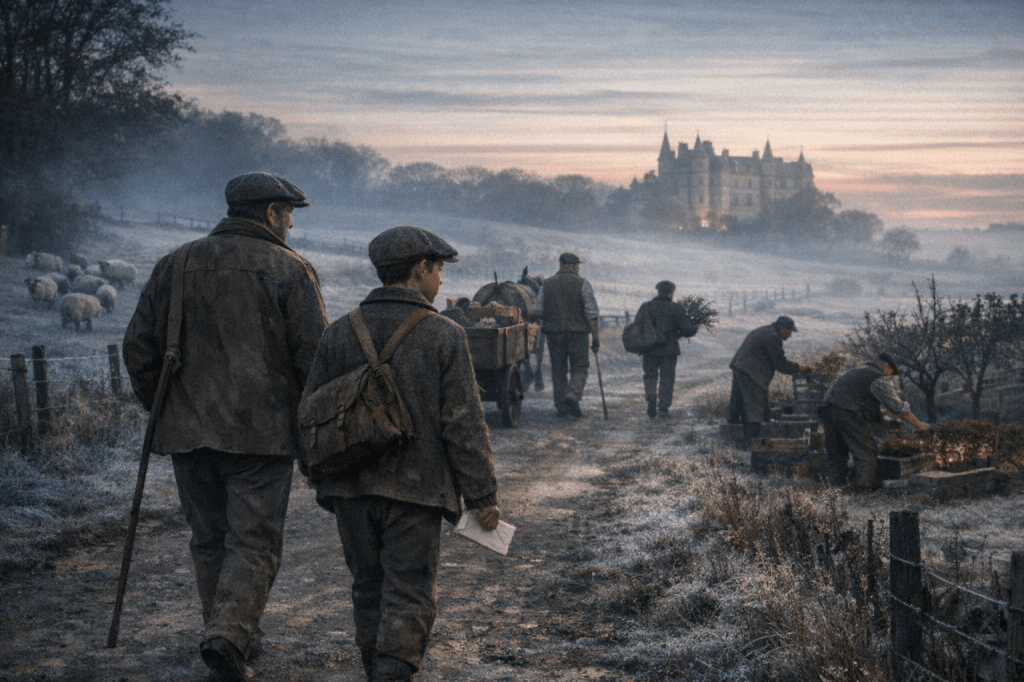
His father walked with him as far as the road toward Clashmore. The fields were still dark, the ground cold underfoot, and the only sound came from the sheep bleating in the fields as they passed. Alexander carried a brief letter of introduction from the gardener at Skibo, practical, to the point, and enough to show he came from a reliable family. The head gardener at Dunrobin expected boys to present themselves early and ready to work, and Alexander intended to do so.
They spoke little on the walk. His father was not a man given to long explanations, but he made it clear that this was a chance worth taking. Farm labour would always be there, he said, but garden training offered a trade that could carry a man beyond the fields. Alexander listened, aware that his father’s words carried the weight of experience.
Dunrobin and Beyond
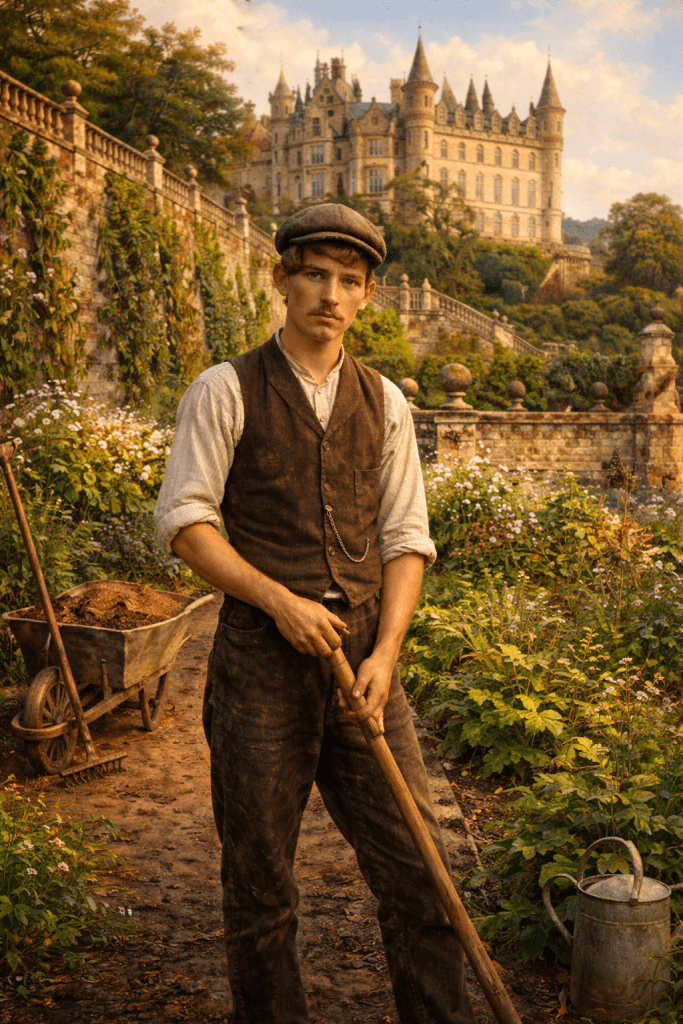
The estate was already stirring when he arrived. A cart rattled toward the stables, and smoke rose from the chimneys of the gardeners’ bothy. At the entrance to the walled garden, he paused, taking in the glasshouses catching the early light. A man in a dark jacket, older, broad‑shouldered, unmistakably in charge, was inspecting a row of cold frames. Alexander approached, removed his cap, and offered the letter.
The head gardener read it without expression, then looked him over with a practised eye. He asked a few questions about schooling, tools, and whether he was willing to work long hours in all weather. Alexander answered plainly. After a moment, the man gave a short nod and told him to report the next morning. There would be no pay at first, only board and training, and he would be expected to prove himself.
Alexander accepted this without hesitation.
That evening he was shown to the small room he would share with two other apprentices. It was sparse but clean: a narrow bed, a stool, a shelf for his belongings. As he set down his bundle, the distance from Over Skibo pressed in on him, the cottage, Mary’s steady presence, the familiar fields, all now behind him. He could not yet know how much would change in his absence; he knew only that he had begun something new.
The gardeners’ house in Golspie was small, but it ran on a rhythm of its own. Before sunrise, the men were already stirring, boots pulled on, jackets shrugged into, the scrape of a basin as someone splashed cold water on his face.
Dugald Watson, the foreman gardener and nominal head of the household, was always the first to rise. He moved with the brisk assurance of a man who knew exactly what the day required. He spoke little, but the others followed his lead.
Matthew MacKay, the journeyman from Barra, brought a different energy, quick, light‑footed, with a habit of humming under his breath as he laced his boots. He had already been on two estates before Dunrobin and carried stories of places the younger apprentices had never seen.
Hector Morrison, local to Golspie, was steady and good‑natured, the sort who shouldered tasks without complaint. He and Alexander often left the house together, walking the short distance to the gardens in companionable silence.
And then there was Betsy Sutherland, seventy‑five and long retired from service, who kept the household running in ways the men barely noticed. She rose slowly but with purpose, her hands still deft as she laid out bread or swept the hearth. She called them “the lads,” no matter their age, and they accepted it without protest. In the evenings, she mended their shirts by lamplight, her needle flashing in and out of the cloth with the ease of a lifetime’s practice.
👨🌾 Household Members
1881 Census — Gardeners’ Household, Golspie, Sutherland
District: Golspie, Sutherland Address: Golspie Census Year: 1881
| Name | Age | Relationship | Occupation | Birth Year | Birthplace |
|---|---|---|---|---|---|
| Dugald Watson | 20 | Head | Foreman Gardener | 1861 | Nairn |
| Matthew MacKay | 18 | Fellow Servant | Journeyman Gardener | 1863 | Barra, Inverness‑shire |
| Hector Morrison | 20 | Fellow Servant | Apprentice Gardener | 1861 | Golspie, Sutherland |
| Alexander McCulloch | 18 | Fellow Servant | Apprentice Gardener | 1863 | Creich, Sutherland |
| Betsy Sutherland | 75 | Retired Servant | General Domestic Servant | — | Clyne, Sutherland |
He remained at Dunrobin for several years, long enough to move from the uncertain footing of a new apprentice to the steadier confidence of a young man who understood what was expected of him. By the time the 1881 census was taken, he was eighteen and listed among the gardeners at the castle, one of several apprentices under the head gardener’s supervision. His days were full: tending borders, lifting soil in the glasshouses, pruning fruit trees, carrying tools between sheds and the walled garden. It was demanding, but it offered skill and direction.
For Alexander, the house was both unfamiliar and reassuring. He missed the hearth at Over Skibo, but here there was a sense of shared purpose: the scrape of chairs, the clatter of spoons, a loaf of bread, a shared day’s work.
Sometimes, after supper, the men talked about weather, wages, the head gardener’s temper, or the new glasshouse panes that had arrived chipped from Inverness. Matthew told stories of the islands; Hector spoke of Golspie families Alexander half‑knew; Dugald offered the occasional dry remark that made them all laugh. Betsy listened from her chair by the fire, her needles clicking steadily.
It was not home, but it was a place where he belonged for a time, a place where he learned not only the craft of gardening but the practical ways men lived together when work bound them more closely than kin.
His father’s move to Golspie marked the beginning of a new chapter for the family. The daughters lived with him there until, in late 1881, he remarried and took up a position as a farm grieve on another estate. The family dispersed in small, practical steps, each finding their own place.
For Alexander, Dunrobin provided training, but it was only one step in a longer path. Gardeners could spend years working their way up, and positions were limited. Some men stayed on estates for life; others moved south in search of better prospects.
It was during these years that a new restlessness began to take hold. From the upper terraces of the Dunrobin gardens, he often paused to look out over the Moray Firth. On a clear day, he could see all the way to Tarbet, where his father had been born. The sea lay broad and changeable below the cliffs, its surface shimmering with light. Vessels passed through that expanse, coastal craft close to shore, larger ships heading for deeper water.
The gardens offered a life shaped by seasons and soil, yet the sight of the sea suggested possibilities that lay beyond the estate.
When he decided to leave is unknown. Young men from Sutherland often moved between trades without leaving a clear trace, especially after an apprenticeship ended. Ships left regularly from Cromarty, Invergordon, and the east‑coast ports, taking on crew for coastal runs, Baltic voyages, and longer passages abroad. The job was hard, but the pay could exceed what an estate could offer, and the chance to travel appealed to many who felt the limits of life on land.
The decision marked a clean break. The boy who once walked the road from the croft to school now stood on the decks of merchant ships, carrying cargo between distant ports and learning a new way of life.
The Turning Tide
The years he spent at sea are lost to time. He left the merchant service without ceremony. No discharge papers survive, and no final voyage is remembered in family stories. Only the sense that, by the late 1890s, he had stepped away from the life of the sea. The timing suggests a reason he never spoke aloud. In 1899, his brother Roderick, once the steady older brother who had worked at Over Skibo before joining the police, died in Edinburgh, his life cut short before the century turned. The news travelled slowly, but when it reached Alexander, it must have carried a weight no letter could soften.
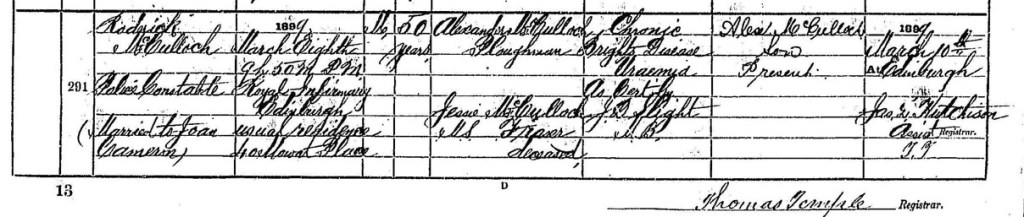
His thoughts turned to his family. His brothers had kept in touch. John had written when he could, telling his younger brother there was always room for another pair of hands. Thomas and Finlay knew the value of a reliable man in the pits. They sent word of opportunities at Polquhairn and the neighbouring collieries.
In 1900, the mining districts of Ayrshire were thriving, wages were regular, and a man with strength and experience could find a job easily. More than that, it was where his brothers were. John and Finlay were living in Rankinston, and Thomas had settled in Prestwick. Thomas had a young family of his own, and Finlay was a pit sinker at the nearby colliery.
And so it was toward these brothers that Alexander now travelled.
Family Reunited
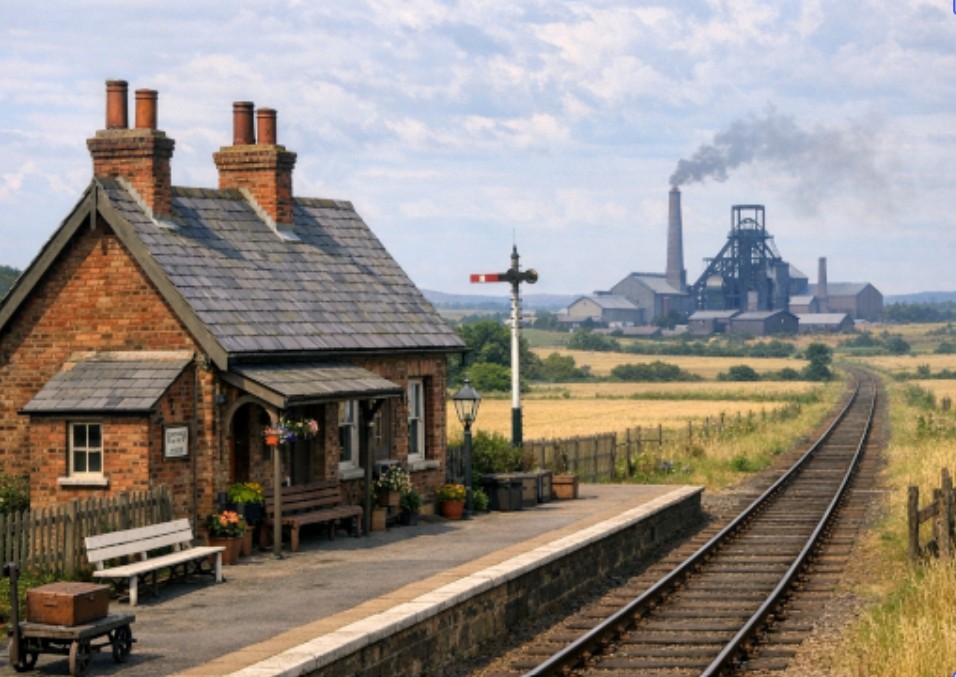
Alexander stepped off the train onto the single platform station in Rankinston. The air smelled faintly of coal and hot iron, the kind of smell that settled on a place and marked it as a mining village. The overnight rain had left the road slick and pitted; he picked his way around a wide puddle that stretched from one doorstep to the next, the mud soft enough to pull at his boots.
He moved along Station Row, a line of low, dark‑stone terraced cottages that opened directly onto the road. Each house had a single door and window facing the street, plain and practical, with a wooden barrel or iron pail set out to catch the rainwater everyone relied on. With the men already down the pits, the row felt emptied of its usual life.
A woman stood in one of the doorways, arms folded against the chill. She watched him approach with the frank curiosity of someone who knew every face in the village. Alex nodded as he passed, and after a moment she nodded back, satisfied enough to let him go on.
A small dog trotted out from between two barrels, tail wagging as if greeting strangers were its appointed duty. It sniffed at his boots, decided he was acceptable, and followed him a few steps before darting off again.
Ahead, the road dipped slightly toward another row, where he knew from his letters he would find his brothers. The thought of them brought a lift to his chest. Whatever lay ahead, he was no longer arriving into the unknown.
Into the Pits -1901
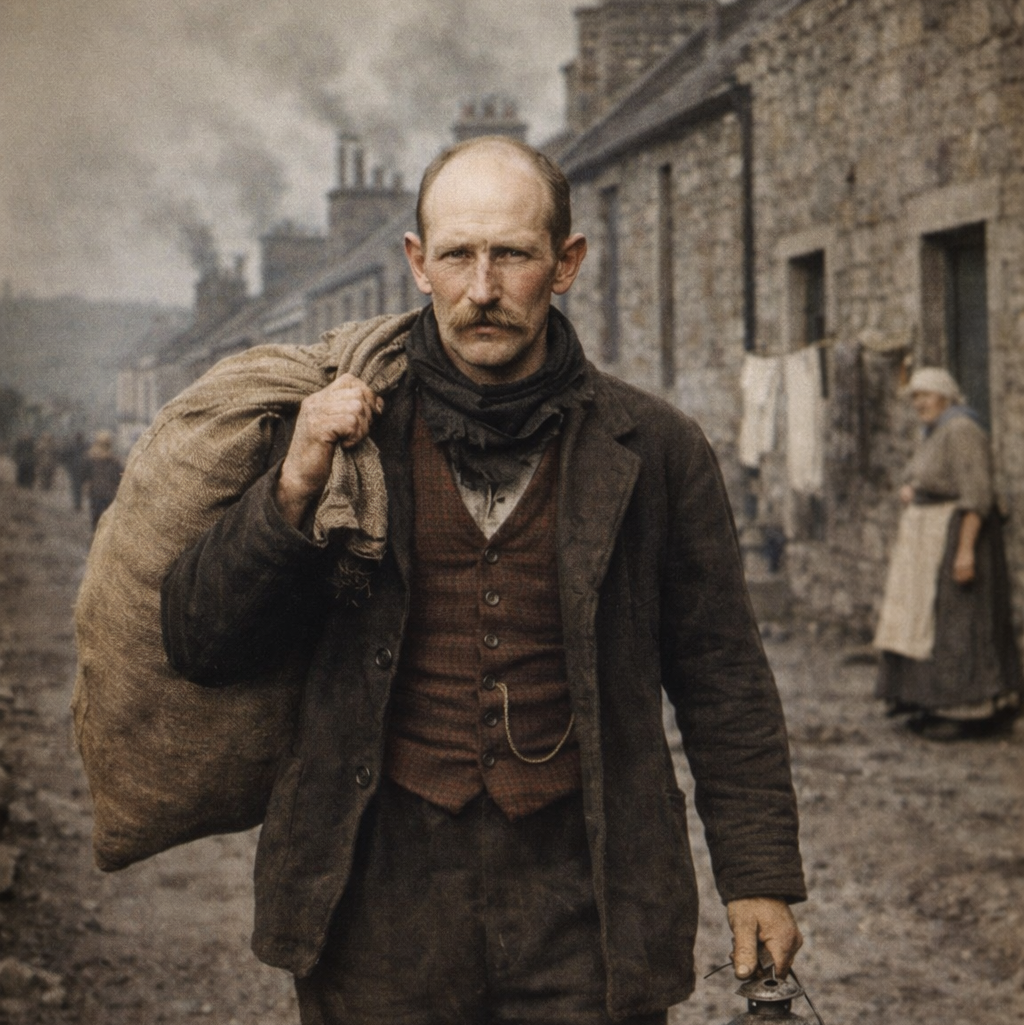
By 1901, he had settled into the lodgings arranged for him by his brother, at No. 41 Rankinston, the home of Hugh and Elizabeth McCaskill. The cottage was small and orderly, shaped by the routines of a household built around shift work. Hugh, an ironstone miner, left before dawn; Elizabeth kept the fire steady and the meals plain. Their young son, Hugh, hurried off to school. Alexander soon settled in, up early, a quick wash, then out into the half-light with John Davidson, Elizabeth’s older son, who toiled beside him at the colliery.
1901 Census — 41 Rankinston, Coylton Parish
| Name | Relationship | Age | Occupation | Birthplace |
|---|---|---|---|---|
| Hugh McCaskill | Head | 47 | Ironstone Miner | Kilwinning, Ayrshire (c.1854) |
| Elizabeth McCaskill | Wife | 51 | — | Irvine, Ayrshire (c.1850) |
| Hugh McCaskill | Son | 8 | Scholar | Coylton, Ayrshire (c.1893) |
| John Davidson | Stepson | 23 | Ironstone Miner | Auchinleck, Ayrshire (c.1878) |
| Alexander McCulloch | Boarder | 38 | Pit Sinker | Creich, Sutherlandshire (c.1863) |
He was glad to have his brothers close. John, now a char contractor, travelled the nearby towns hiring women from the rows when he needed extra hands. Finlay was a pit sinker, a job that demanded strength and nerve.
They saw one another most reliably on Sundays at church, the week’s fatigue visible in the set of their shoulders. Now and then, when shifts aligned or weariness left them with little energy for anything else, they sat together over tea, speaking of their day, wages, and the small matters that filled their days. To Alex, those unremarkable evenings were a steadying presence, a reminder that he was among his own.
The pit began before dawn. At the colliery yard, lamps bobbed in the dark like a string of low stars. Men stood in small knots, speaking little. Alexander joined them, another figure moving toward the cage. His first tasks were the heavy ones given to new hands, clearing debris, hauling timber, assisting the drawers and hewers. Underground, the world narrowed to the beam of a lamp and the sound of picks striking coal. The air was close, the roof low, the walls glossy with water. He learned how to brace a prop, judge the shift of weight in the roof, and move with the men as if they were one.
He returned to his lodgings tired and dirty. He washed, ate what was set before him, and slept. His brothers were near, but their days were long, and their families needed them. He was welcomed, but he remained on the margins of their settled lives. It was a familiar kind of solitude, not the vastness of the sea or the quiet of the northern roads, but the stillness that comes when a man ends his day with no one waiting for him.
A Village Tragedy – 1903
Among his neighbours were Matthew and Maggie Robertson, a young couple with a small daughter and a new baby. Matthew was a Bencher. Alexander knew him in the way miners often knew one another: by trade, by shift, by the nod exchanged at the pithead. Maggie, he knew only in passing, the woman who moved briskly between house and pump, a swaddled child in her shawl and another tugging at her skirt. Their lives ran parallel to his, close enough to touch yet still belonging to a world he had not quite stepped into.
In the summer of 1903, the quiet of the village was broken. A coal hutch came loose on the incline underground, gathering speed in the dark. The men shouted warnings, but the clatter of iron on rails swallowed their voices. Matthew had only a heartbeat to turn before the hutch struck him, pinning him against a prop with a force that drove the breath from his chest.
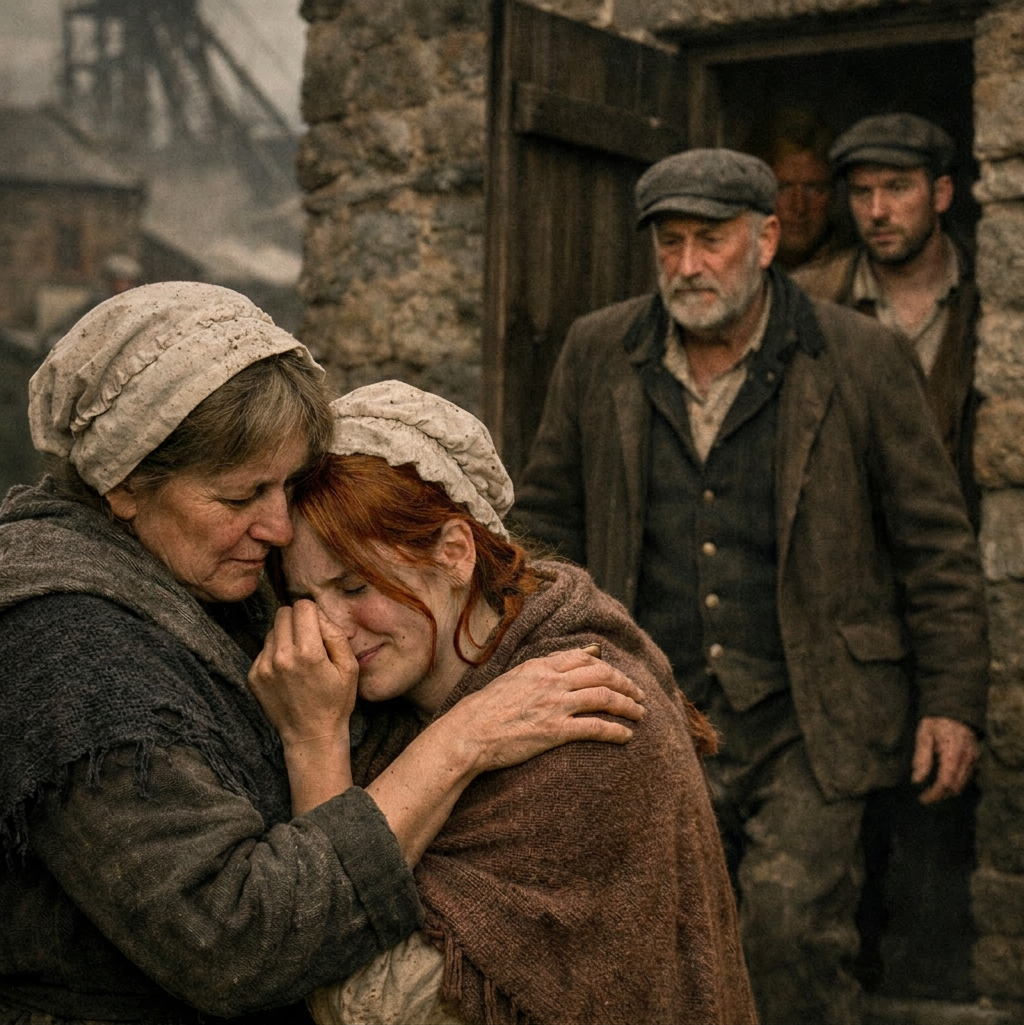
They brought him up on a stretcher of timber and sacking, carrying him through the yard and along the row while neighbours stepped aside in silence. Maggie met them at the door. She said nothing at first, only moved aside so they could bring him in. She was heavily pregnant, her face drawn with shock and strain. The doctor came later, his expression telling more than his words: a fractured spine, no hope of walking again, pain that would not ease.
The months that followed were desperate ones. Maggie’s days narrowed to the space between Matthew’s bed and the needs of the children who clung to her. The long nights of nursing, the cold, the worry, each left its mark. In October, the baby she had been carrying was born too soon and lived only minutes. The midwife said little; such losses were not uncommon in the rows. Maggie buried the child quietly and returned to her husband’s bedside.
Matthew died on 14 January 1904, in the winter at its hardest. After his passing, Maggie moved through her days with a kind of stunned determination. There were mouths to feed, coal to carry, water to draw. Grief had to wait.
Hope in the Shadow of the Pit
Alexander saw it all from a neighbour’s distance. He never intruded, but he was present, a steady figure in the row, a familiar face at the pump or passing the door. After Matthew’s death, their conversations were brief and practical, nothing more than the exchanges of two people bound by proximity and circumstance.
The change, when it came, was modest. One evening, after a late shift, he found her struggling with a stubborn latch while balancing a sleeping child. He stepped forward, freed the latch, and held the door until she passed. She murmured her thanks, expecting him to move on, but he hesitated just long enough to ask, “Are you managing?”
It was the first time he had asked anything beyond the practical. She looked at him then, as the neighbour who lived down the row, but as a man who had watched her endure more than most and had never once overstepped.
“Aye,” she said. It was all she could manage.
He nodded, accepting her answer. But something in the exchange lingered.
After that, their conversations lengthened. He asked after the children; she asked about his shifts. He carried her coal once when the frost was thick. She mended a tear in his jacket and left it folded on his doorstep. The children began to watch for him in the evenings, waiting for the moment he turned the corner of the row.
What Maggie came to understand, slowly, was that Alexander was not like the other men in the village. He was older, forty‑one by the time she was widowed, and carried himself with the reserve of a man who had lived several lives before arriving in Ayrshire. He believed in keeping one’s word, in doing what was right without fuss. He held to the habits of a Highlander: sparing with words, steady in his effort, respectful of a woman’s burdens.
Maggie found reassurance in that steadiness. After the accident, the months of nursing, the death of her baby, and the winter that followed, his presence felt like shelter. He never pushed. He simply appeared when needed and stepped back when not.
By 1905, the understanding between them had deepened, though nothing had been spoken plainly. In a village like Rankinston, such things rarely required declarations. People saw what was happening long before the couple themselves admitted it.
Alexander spent more time at her door, fixing a hinge, chopping wood, or carrying water when the pump froze. Maggie, in turn, set aside a plate for him now and then or asked his help with a task that required strength. The children began to speak of him as though he were already part of the household.
It was a courtship shaped by circumstance and respect. Maggie was cautious; she had known loss too closely to step lightly into anything new. Alexander was patient; he understood that trust, once shaken, had to be rebuilt slowly.
In the spring of 1906, he asked her, plainly, without flourish, if she would consider marrying him. He did not speak of love; Highland men rarely did. He spoke instead of providing for her and the children, of building a home where none of them would have to face the world alone.
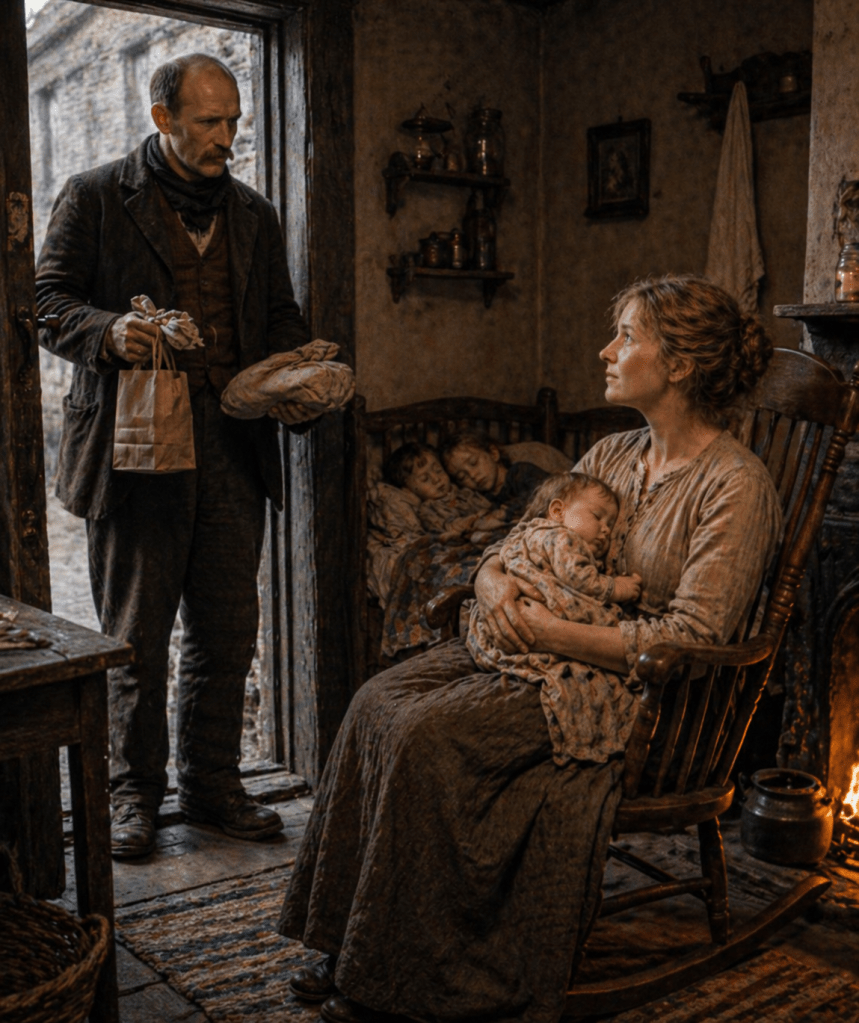
Maggie listened, her hands folded in her lap, the children playing at her feet. She thought of the years behind her, the accident, the long winter, the baby she had lost, and of the man standing before her: reliable, gentle in ways that mattered more than words.
She said yes.
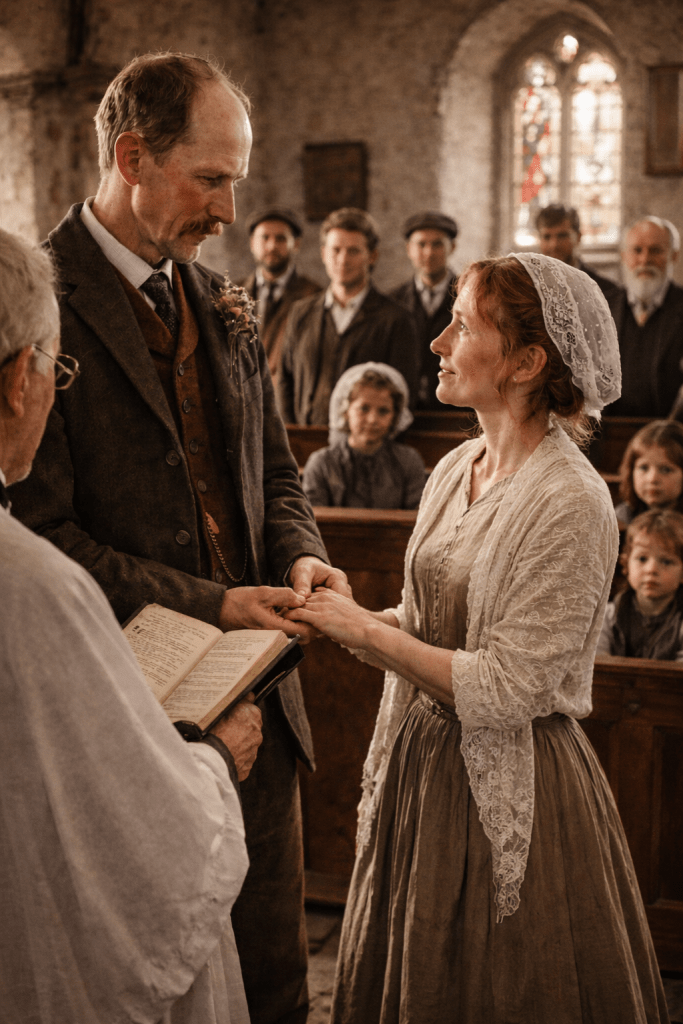
They were married in the little church in Rankinston on 6 July 1906, a small ceremony witnessed by neighbours who had watched their lives run side by side for years. It was not a grand beginning, but it was a solid one, built on shared hardship, mutual respect, and the steady kindness of a man who had once arrived in the row as a stranger and had, slowly and surely become, the centre of her little household.
The Children of Station Row – 1911
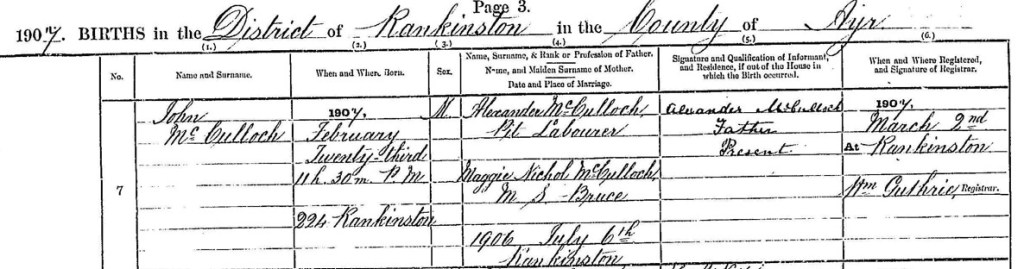
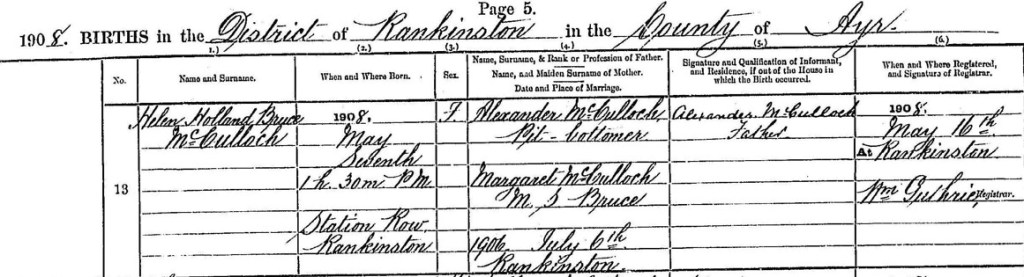
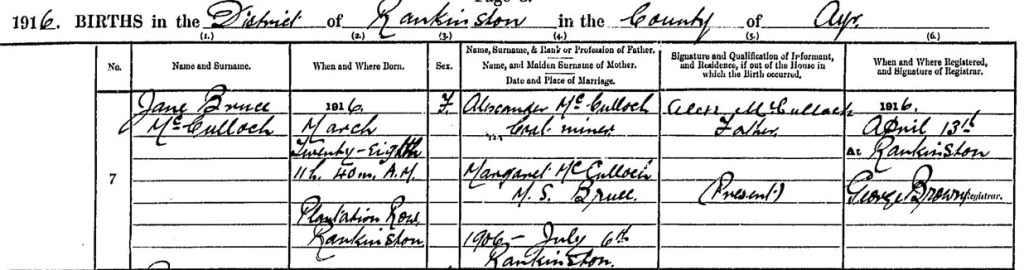
Children came quickly in the years after Maggie and Alexander married, each new arrival anchoring her more firmly to Rankinston despite the shadows of the past. John was born in 1907, followed by Helen Holland Bruce in 1908 and little Alexander in 1909, their names echoing both families and the threads of memory Maggie carried with her. Jessie Fraser arrived in 1911, and two years later, in 1913, Andrew Robertson was born, his middle name a quiet, deliberate act of remembrance for the husband she had lost. Jane Bruce completed the family in 1916. All six children were born in Rankinston, their early years shaped by the mining village that had already witnessed Maggie’s deepest griefs and her determined rebuilding.



By the spring of 1911, Number 8 Station Row in Rankinston was a full and bustling household. The census taker found Alexander McCulloch at its head, forty‑eight years old, a pit bottomer by trade. Maggie, thirty‑six, stood beside him as wife and keeper of the home, her roots in Newbattle near Edinburgh a reminder of the long road that had brought her to this narrow row of miners’ cottages.
Their young family filled the small house with noise and movement. Four‑year‑old John, born in Coylton, was already sturdy on his feet. Helen, two, followed close behind, and baby Alexander, just a year old, was still carried on Maggie’s hip. Alongside them were Maggie’s older children from her first marriage, Margaret, eleven, William, ten, and Sarah, seven, each attending the local school and already learning the discipline of early mornings in a mining village.
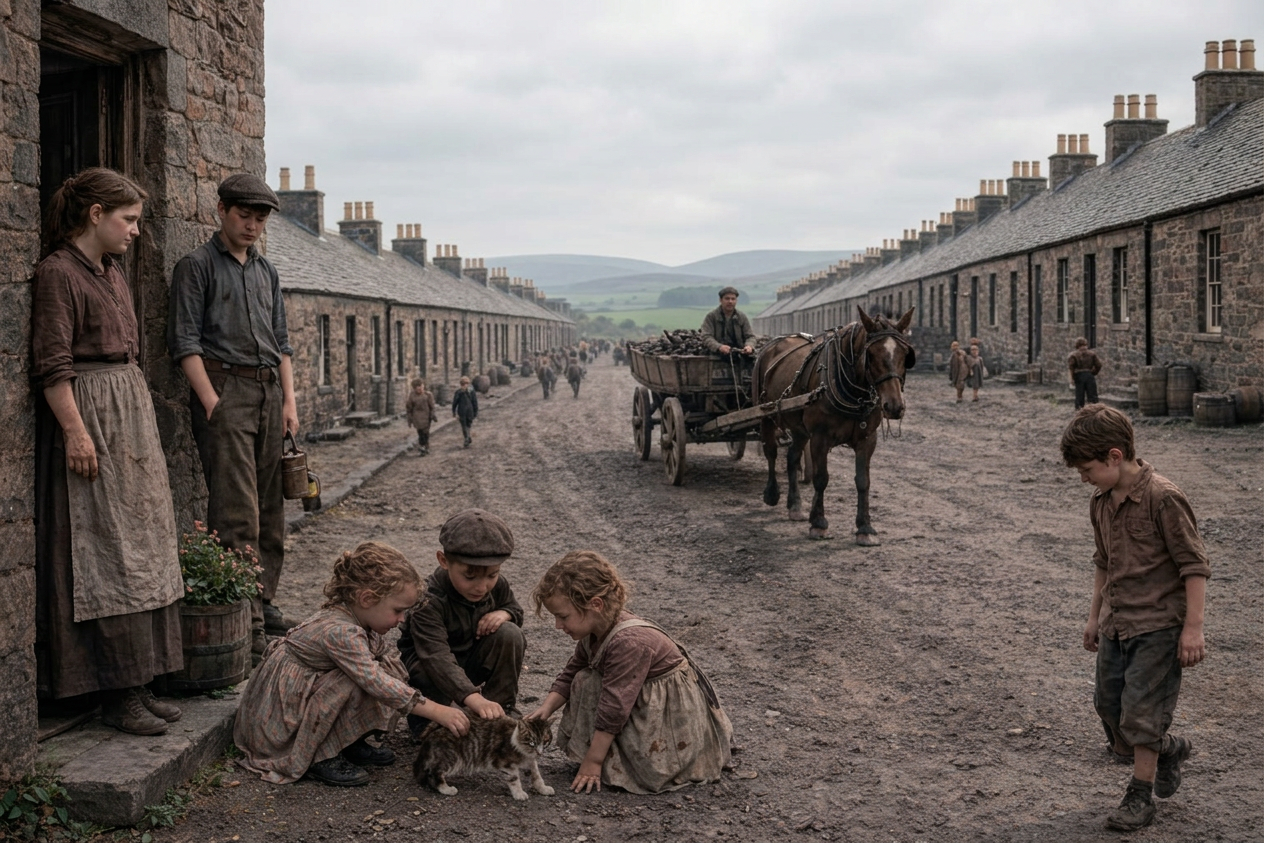
A boarder, Donald Thomson, age thirty‑nine, lodged with them, a coal miner from Dumbarton who shared their table and their routines, as was common in the rows where every shilling mattered.
It was a household shaped by necessity, by the pit, by the unspoken agreements of village life. The census captured only names, ages, and occupations; the truth of Number 8 was something fuller: cramped, lively, imperfect, but undeniably a home.
A Mother’s Pain – 1913
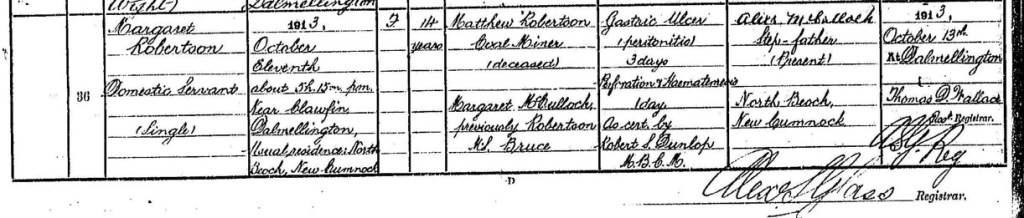
In 1913, the family were living in North Beoch, near New Cumnock, where Alexander was employed in the ironstone pit. Such frequent moves were common among mining families as they followed the opportunities. The children adjusted quickly, as children do, and Maggie set about making the new house homely. Yet, that summer, sorrow found them again.
Maggie, already stretched by the move and the demands of a growing family, was expecting another child in November and feeling the strain. Her eldest, Margaret Douglas, just fourteen, had recently taken up a position at Clawfin Farm. Maggie felt both proud of her girl’s determination and anxious about how quickly childhood had slipped away. Margaret had reached the age when a young girl’s modest wage could make a real difference, buying coal, a few extra provisions, easing some of the household’s tightness, and as the eldest daughter, she shouldered much of the daily chores: minding the younger children, helping with the washing and cooking, and lightening her heavily pregnant mother’s load whenever she could.
Margaret had been in service for only a short time when she fell suddenly ill. A sharp pain, a rising fever, and a weakness that left her unable to stand. Her employers, alarmed by the speed of her sudden collapse, settled her into a bed at the farm and quickly sent word to her family. Maggie and Alexander came at once.
Too ill to be moved, she remained at Clawfin. For three days, Maggie stayed beside her, exhausted and anxiously holding her daughter’s hand, speaking to her even when Margaret could no longer answer. Alexander stayed back, unsure how to help.
The doctor examined the girl and spoke with the quiet certainty of a man who had little to offer. He suspected an ulcer, but treatment was limited to rest and hope. On the third day, the illness took a devastating turn as the ulcer perforated, and Margaret’s strength ebbed away.
On the 11th October, she died with her mother and stepfather beside her.
Alexander registered the death, an act of duty and love, the last thing he could do for the girl who had grown up under his roof.
For Maggie, the loss cut deeply. She had buried a baby in 1903, nursed a dying husband through a long winter, and now, with another child soon to be born, she found herself standing at her firstborn’s graveside, watching the earth close over her loved one once more.
After Margaret’s death, the family returned to Rankinston, and as the months passed, daily life slowly returned to normal, though their household would never be the same.
In November, the new baby boy, named Andrew Robertson, brought a fragile brightness into the home, a reminder that life moved forward even when grief lingered. His arrival was shadowed by the absence of a sister who should have been there to welcome him.
The following year, war broke out. Alexander, at fifty-two, was too old to serve, and his place remained in the pits, where older men were needed more than ever. With so many younger miners being called up, the burden fell on those who stayed behind to keep the coal moving, fuel for ships, factories, railways, and the machinery of war. His stepson, William, only fourteen, was too young for military service and still too young for the heaviest pit labour, though he was edging toward the age when boys left school for the mines.
Amid the strain of wartime life, the family grew again. On 28 March 1916, Maggie gave birth to her last child, Jane Bruce. Her arrival brought a little ray of light into the household. With Andrew, a toddler and Jane, an infant, Maggie’s days were full, and the older children were expected to help out where they could.
When the war ended in 1918, a deep weariness settled over Scotland. Coal production had already fallen during the later war years, and the post‑war period brought a steady economic decline: unemployment rose, wartime demand for ships and munitions evaporated, and shipbuilding and steel, pillars of the Scottish economy, contracted sharply. The Ayrshire pits had been hollowed out by the war: the youngest men were at the front, older hands were worn down by long shifts, and peace did not restore the industry to its former strength. Prices climbed while wages lagged and government controls lingered, leaving families with little sense of stability.
Every village set up its war memorial, each name a familiar absence felt across the rows; those stone lists were daily reminders of what had been lost and of how fragile the future now seemed.
For Alexander, it was clear that Ayrshire could no longer offer the security his family needed. Maggie’s parents were already settled in Hamilton, where broader prospects, better wages and a chance for the children to grow up with opportunities that the little village in Ayrshire could not offer. Leaving was not a turning away but a necessary step.
Post War Years
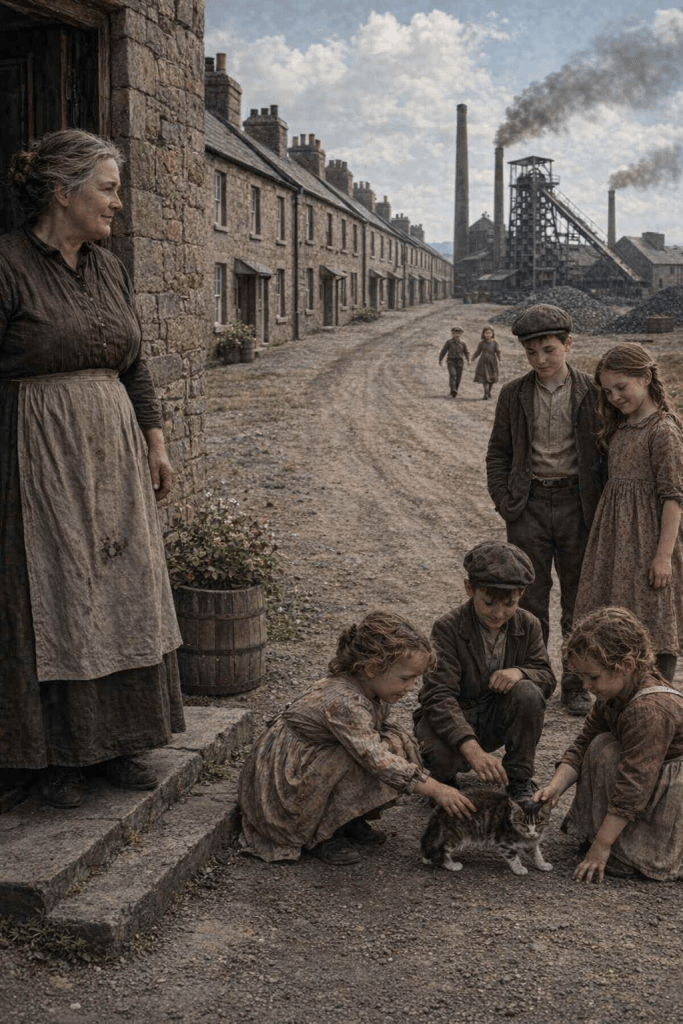
1921, the family settled into their new home in Ferniegair, another small house in a miner’s row much like the ones they had known before.
As life unfolded in the early 1920s, the house at 5 Ross Street was full to the brim. There was always an undercurrent of worry. The West of Scotland was feeling the chill of the post‑war years: heavy industries were faltering, wages lagged behind rising prices, and men who had spent all their lives found themselves on short time or fearing the next stoppage. In that world, every shilling Alexander brought home mattered, every loaf had to stretch a little further.
Alexander, now 58, was a Pit Head Worker employed by A. Russell & Co. Now a long way from Sutherland, he had spent the last two decades in the mines, and though time had taken him above ground, the duties were still demanding. The census noted six dependent children, a reminder of the large family still under his care.
Maggie, 46, was listed simply as occupied by Household Duties, a term that barely hinted at the labour she put in to raising her family.
The children filled the house with noise and movement. With nine people under one roof the house was constantly busy with their comings and goings.
William, at twenty, was now a grown man. A miner like his father and stepfather. John was fourteen. He had left school but had not yet found employment.
The younger ones filled the house with noise and laughter. They still belonged to the classroom attending the local school at the top of the hill.
And so the census found them, mid-stride, mid-noise, mid-life, one crowded household in Ferniegair.
1921 Census — Household of Alexander McCulloch
Address: 5 Ross Street, Ferniegair, Hamilton District, Lanark Enumeration District: 34 Schedule No.: 104
Household Members
| Name | Relationship | Age | Marital Status | Birthplace | Occupation | Notes |
|---|---|---|---|---|---|---|
| Alexander McCulloch | Head | 58 | Married | Creich, Sutherland | Pit Head Worker | Employed by A. Russell & Co.; 6 dependent children |
| Margaret McCulloch | Wife | 46 | Married | Newbattle, Midlothian | Household Duties | — |
| William Robertson | Stepson | 20 | Unmarried | Ochiltree | Miner (Hewer) | — |
| John McCulloch | Son | 14 | — | Coylton | None | — |
| Helen McCulloch | Daughter | 13 | — | Coylton | Scholar | — |
| Alexander McCulloch | Son | 11 | — | Coylton | Scholar | — |
| Jessie McCulloch | Daughter | 10 | — | Coylton | Scholar | — |
| Andrew McCulloch | Son | 7 | — | Coylton | Scholar | — |
| Jeannie McCulloch | Daughter | 5 | — | Coylton | Scholar | — |
When the Old Ways Meet the New
Her health began to falter. The signs were small at first: tiredness that lingered, a heaviness in her chest, days when she moved more slowly than before. In 1927, the illness that had been advancing quietly revealed itself more clearly. Breast cancer was spoken of softly in those days, often too late for treatment to offer much hope.
On 28 February 1927, at the age of fifty‑two, Maggie died at home, surrounded by the family she had held together for so long. For Alexander, it was a loss that cut deeply. He had known hardship all his life, but Maggie had been his anchor.

With Sarah, known as Sis, settled in Lesmahagow, Helen became the eldest daughter left at home, and the weight of that role fell heavily on her. Still in her mid‑teens, she found herself stepping into the space her mother had once occupied: cooking, washing, minding the younger children, keeping the house in order, and bringing in a small wage as a cleaner. It was the kind of unspoken transition that had shaped working‑class families for generations, but to Helen it felt confining, as if the world were narrowing just as she was ready to step into it.
Alexander saw it differently. He had been shaped by a Highland upbringing in which family survival depended on everyone doing their part. When his own mother died, it had been his sister who took on the household without question. That memory settled in him as a quiet rule about how families worked. To him, Helen was simply taking her rightful place as the eldest daughter, keeping the home steady so he could work and the younger children could stay in school. His love was expressed in wages brought home, coal on the fire, and a roof that held against the rain.
To Helen, it felt like something else entirely. She saw a father set in his ways, unable to see the cost of what he was asking. The world around her was changing; women were keeping jobs, talking about independence, imagining futures beyond the rows. Yet in the small house on Ross Street, the old expectations held firm. Her wage went into the family purse. Her time was not her own. And when she was told to polish her brother’s boots, it was not the task itself that broke her, but what it represented: that her life was assumed to belong to others.
In that moment, Alexander’s inherited sense of duty collided with Helen’s emerging sense of herself. To him, she was failing in her responsibilities. To her, he was blind to the person she was becoming.
Quietly, she began to save what she could. When she finally bought her ticket for Canada, it was not rebellion but the culmination of months of feeling unseen and overburdened.
Helen’s Goodbye
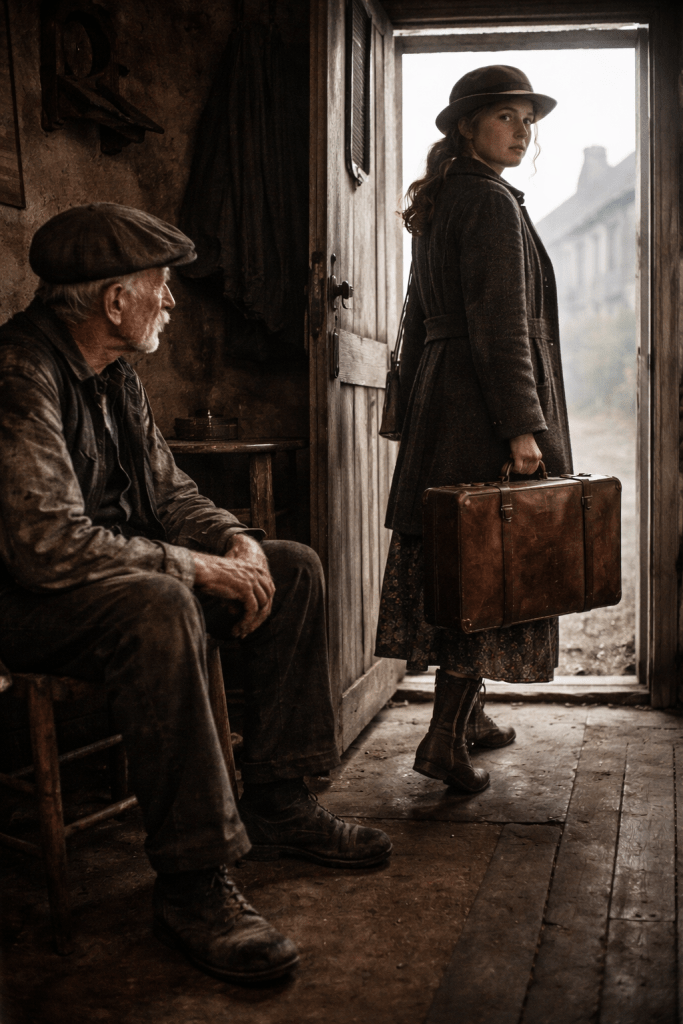
Helen rose before dawn, though she had barely slept. The house lay in that fragile stillness before morning, only the faint tick of the mantel clock and the soft breathing of her younger sisters behind the curtain. She dressed quickly, folding her few belongings into the small second‑hand case she had bought in Hamilton, its lining worn thin. Her hands trembled as she fastened the clasp, not from doubt, but from the enormity of what she was about to do.
Jessie stirred first. Helen held her close, feeling the girl’s thin arms tighten around her. There were no words that would soften the moment, so she offered only a long, steady embrace. The younger girls woke next, confused and sleepy, and Helen kissed each of them lightly on the forehead, turning her face away so they wouldn’t see the tears gathering.
In the kitchen, her father was already up. He sat at the table, boots half‑laced, his expression unreadable. Helen felt the familiar distance between them.
She set her case down for a moment, steadying her breath. There were no words that would bridge the space between them, no explanation that would make him understand the world she longed for, the one that lay beyond the pit rows and the narrow vision of a mining village. She felt his disapproval like a weight, but she did not bend beneath it.
Lifting the case again, she walked to the door. She paused only once, not to look back, but to make a silent vow she knew she would keep.
She would not return.
A Father’s Regret
Outside, the morning air was sharp and cold, carrying the faint smell of coal smoke from the early shifts. Fear fluttered in her chest, quick and bright, but beneath it was something steadier: the first sense of her own life opening before her. She stepped onto the road, the sky just beginning to pale, and let the door close behind her without a sound.
He heard her moving before the light came—soft steps on the boards, the faint scrape of a case being lifted. Alexander sat at the kitchen table, boots half‑laced, staring at the cold grate. He had known this moment was coming long before the sound reached him. There had been a distance in Helen for months, a tightening in her shoulders, a quietness that was not shyness but resolve. He recognised it because he had seen it once before, in his own sister after their mother died. Duty had settled on her like a mantle. He had expected the same of Helen.
But Helen was not his sister. And this was not Sutherland.
He kept his eyes on the table as she entered the room. The case in her hand told him everything. A father should have said something—asked her to stay, demanded an explanation, offered one last instruction—but the words would not come. He felt the old Highland stubbornness rise in him, the belief that families held together because they must, that daughters stepped into their mothers’ place because there was no other way. It was how he had been raised. It was the only way he knew.
Yet here she was, leaving.
A flicker of pride surprised him, sharp, unwelcome. She had her mother’s backbone, that was certain. But pride was quickly swallowed by something heavier: the sting of being left behind, the quiet humiliation of a daughter choosing her own life over the one he had laid out for her. He did not understand it. He did not know how to understand it. The world had shifted under his feet, and he had not moved with it.
He watched her cross the room, her face set, her steps steady. She did not look back. That, more than anything, struck him. His sister had never looked back either, but she had stayed. Helen was doing what no woman in his family had done, walking away.
When the door closed behind her, the house felt suddenly too large, too quiet. The younger children still slept. Life would go on, as it always had. But something in him sagged, a weight settling where anger had been.
He tightened his bootlaces with hands that were not as steady as they once were. He told himself she would come to her senses one day, that she would write, that she would return. But even as he thought it, he knew she would not. He had seen the set of her jaw, the certainty in her step.
Helen was gone. And the world she belonged to was not his.
He rose, put on his coat, and stepped out into the morning. The air was cold, the sky pale, and the road to the pit lay ahead as it always did.
But the truth followed him down the road: he had lost his daughter long before she walked out the door.
The Final Years of Alexander
By the early 1930s, the house in Ferniegair had grown quieter than Alexander ever expected. One by one, the children who had once filled every corner with noise and movement slipped into their own lives.
John was the first of the boys to go. The pits around Hamilton offered little security, and the promise of steadier wages in the English Midlands drew him south. William followed soon after, the two brothers drawn by opportunities that Scotland’s shrinking coalfields could no longer offer. Their letters home were brief but optimistic, news of good shifts, new lodgings, and the excitement of a city that seemed a world away from Ferniegair.
Sis had already begun her own life with William Mackie Weir. Her visits grew less frequent as her responsibilities deepened, though she still checked on her stepfather when she could.
Jessie married Samuel Wright Maxwell Miller in 1931 and settled in Hamilton. By t1940 she already had five children of her own and another on the way.
His youngest daughter, too, had gone to Birmingham. Perhaps tempted by the tales from her brothers.
The coal industry staggered from slump to stoppage. Though Alexander was long past the age of hewing, he still did what he could, sweeping, polishing lamps, anything that kept him useful and kept a small wage coming in. Pride would not allow him to be idle. He had been shaped by a Highland childhood where every pair of hands mattered, and he carried that belief into old age.
But he was slowing. The long years underground, the strain of raising a large family through war and hardship, and the griefs he never spoke of had taken their toll. Neighbours noticed him walking more carefully, leaning a little heavier on the railings outside the house, sitting longer on the bench near the station where he could watch the trains come and go.
He never complained. He never asked for help. That was not his way.
What he did feel, though he would never have admitted it, was the ache of a house that had emptied too quickly. The children he had worked for, worried for, and sometimes argued with were now scattered across Scotland, England, and Canada. He was proud of them, of course. But pride is a quiet companion in old age, and it does not fill the silence.
For Alexander, now well into his seventies, the silence pressed in more sharply with each passing year. Age had begun to take its toll. The world he had known was slipping from him.
When the invitation came from Birmingham, an offer from his stepson William Robertson to come south and live with family, it was both a relief and a quiet admission that he could no longer manage alone. And so, sometime around 1939 or 1940, Alexander left Scotland for the last time. He travelled south to 89 King’s Road, a modest house in a city built on iron, smoke, and the labour of men like him.
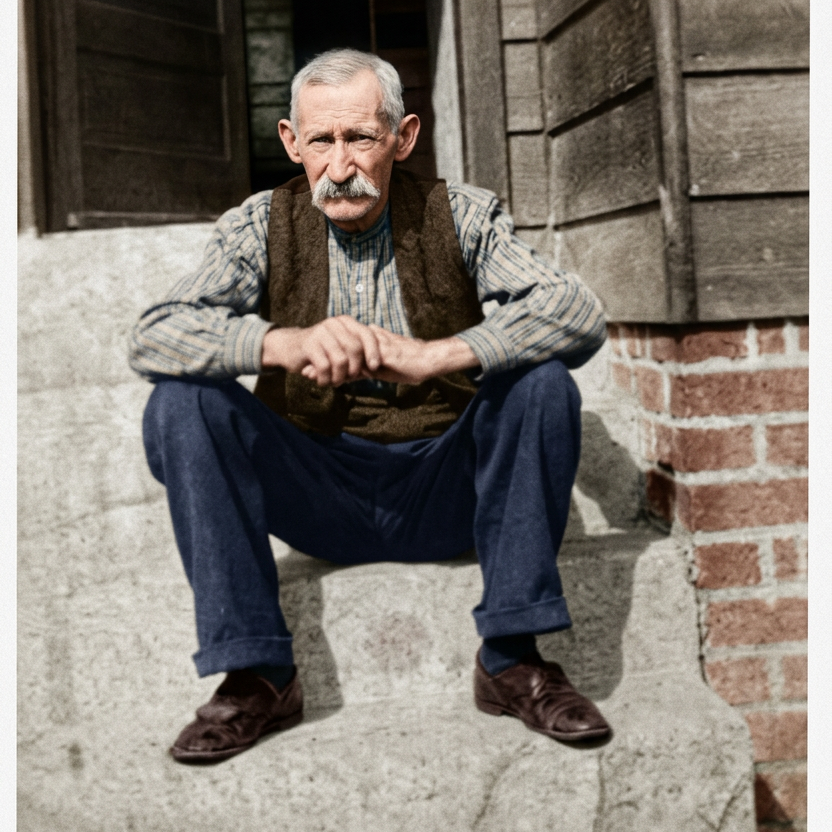
It was a final migration, not for work this time, but for care and companionship.
Alexander died in Birmingham on 11 February 1941, aged seventy‑nine. The death certificate recorded the address on King’s Road and named W. Robertson, his stepson, as the informant. It was a quiet end, far from the birch woods of Creich where he had been born, far from the pits of Ayrshire where he had spent the prime of his life, and far from the house in Ferniegair where he had raised his children.

He had outlived Maggie by fourteen years. He had outlived several of his siblings. He had lived long enough to see his children scattered across Scotland, England, and across the Atlantic. His life had stretched across landscapes and industries—farm fields, castle gardens, merchant ships, coal pits, and finally the vast industrial Midlands.
 Keep Your Kin Up